

Signs of Low Quality Supplements: What to Avoid
Table of Contents
- What Makes a Supplement Low Quality
- How to Read Supplement Labels and Spot Red Flags
- Common Supplement Fillers to Avoid
- Understanding Third-Party Supplement Testing and Certifications
- Bioavailability, Mineral Forms, and Absorption Issues
- Manufacturing Standards and Supply Chain Transparency
- How to Choose High-Quality Supplements That Deliver Results
Last Updated: August 24, 2026
What Makes a Supplement Low Quality
Low quality supplements fail to deliver promised benefits due to poor formulation, inadequate testing, or cheap fillers that compromise efficacy. They often contain synthetic additives, lack third-party verification, or use mineral forms your body cannot absorb efficiently. The supplement industry operates with less regulatory oversight than pharmaceuticals, manufacturers aren't required to prove their products work before selling them, and the FDA doesn't pre-approve supplements like medications. This gap between marketing claims and actual efficacy is where low quality supplements thrive.
At J. Paulo, we've built our entire product line around rigorous testing, clean formulations, and US manufacturing standards that exceed industry minimums.
How to Read Supplement Labels and Spot Red Flags
The supplement facts panel is your primary tool for identifying low quality supplements. Examine the active ingredients list and their quantities in milligrams (mg) or international units (IU). Low quality supplements often list ingredients in amounts too small to produce measurable effects, a practice called "label dressing."
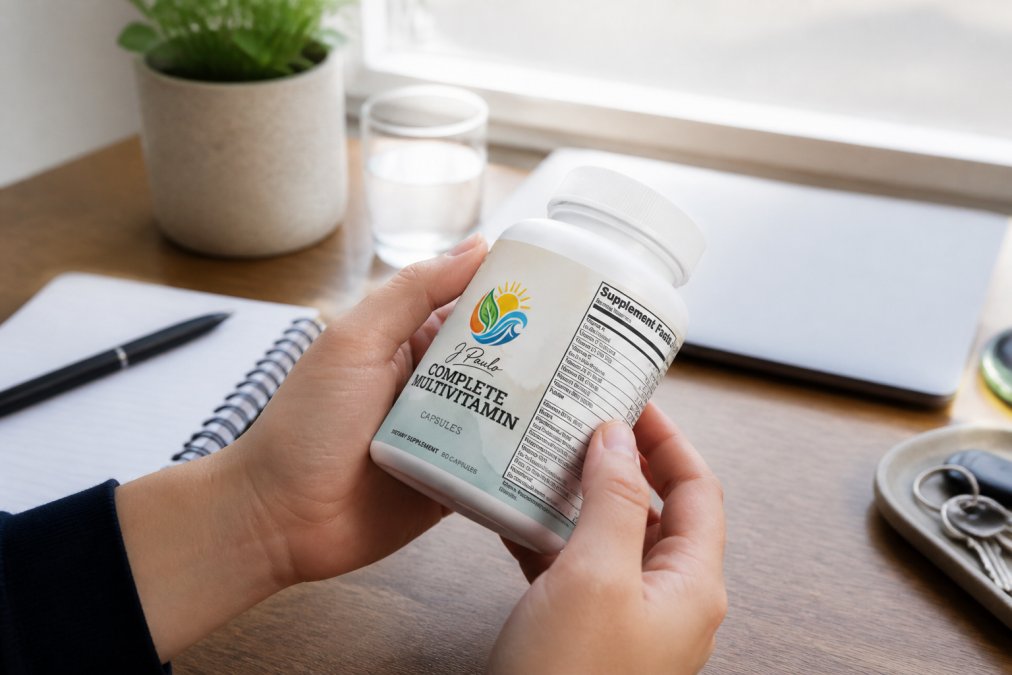
Look for the "Other Ingredients" section, which reveals fillers and binders. Common red flags include silicon dioxide in excessive amounts, magnesium stearate (which can inhibit nutrient absorption), titanium dioxide, dicalcium phosphate, artificial colors, and cellulose derivatives that serve only as bulk.
The supplement facts panel should specify the source of each ingredient. Vague descriptions like "proprietary blend" hide cheap ingredients or substandard potencies. Transparent labels specify exactly what you're getting: "Vitamin D3 (as cholecalciferol) 2,000 IU" rather than just "Vitamin D 2,000 IU."
Check the serving size and number of servings per container. Some low quality supplements artificially inflate potency claims by listing unrealistic serving sizes. Expiration dates also matter, supplements close to or past expiration have degraded potency.
Common Supplement Fillers to Avoid
Fillers are inert substances added to increase volume or reduce manufacturing costs. While some are harmless, many interfere with nutrient absorption or trigger digestive discomfort.
Magnesium stearate is controversial, manufacturers use it for faster, cheaper production, but research suggests it can coat the intestinal lining and reduce nutrient absorption. Cellulose and microcrystalline cellulose serve primarily as bulk and can cause bloating or digestive upset. Low quality supplements often contain 30-50% cellulose by weight.
Silicon dioxide in high concentrations is another red flag. Excessive silica can accumulate in tissues and has been linked to respiratory issues. Titanium dioxide, used as a whitening agent, has raised safety concerns about effects on gut bacteria and intestinal permeability. Artificial dyes (FD&C Yellow No. 5, Red No. 40, etc.) serve no functional purpose and can trigger allergic reactions. Binders like polyvinylpyrrolidone (PVP) and povidone are synthetic polymers that add no value.
Understanding Third-Party Supplement Testing and Certifications
Third-party testing verifies that a supplement contains what the label claims and is free from contaminants. Low quality supplements often skip this step because it adds cost and creates accountability.
Major third-party certification seals include NSF Certified for Sport, USP Verified, ConsumerLab.com, and Informed Choice. NSF Certified for Sport requires testing for over 270 banned substances, making it valuable for athletes. USP Verified supplements have been tested to confirm label accuracy for potency, purity, and dissolution. ConsumerLab.com conducts independent testing and publishes detailed reports, examining not just potency but also undisclosed ingredients and contaminants. Informed Choice certification focuses on contamination screening for banned substances and heavy metals.
Bioavailability, Mineral Forms, and Absorption Issues
Bioavailability refers to the percentage of a nutrient your body can actually absorb and use. Two supplements may contain identical amounts of the same nutrient, but if one has poor bioavailability, your body absorbs far less of it.
Mineral forms dramatically affect absorption. Oxide forms are cheap and poorly absorbed, your body absorbs only 5-15% of minerals in oxide form (peer-reviewed research). Chelated minerals, bound to amino acids, are absorbed at rates 2-3 times higher than oxide forms (peer-reviewed research). Magnesium glycinate, for example, is far more effective than magnesium oxide. Citrate forms offer moderate bioavailability and are a reasonable middle ground.
Bioavailability also depends on other ingredients present. Fat-soluble vitamins like vitamins A, D, E, and K require dietary fat for absorption. Low quality supplements often provide these vitamins without fat, meaning your body absorbs only a fraction of what the label claims. Interactions between ingredients also affect bioavailability, iron and calcium compete for absorption, and zinc can inhibit copper absorption.
Manufacturing Standards and Supply Chain Transparency
Manufacturing standards separate premium supplements from low quality supplements. The FDA's Current Good Manufacturing Practice (cGMP) regulations establish baseline standards, but compliance is inconsistent. Premium manufacturers exceed cGMP standards by testing raw materials before production, verifying potency at multiple stages, and conducting stability testing.
Supply chain transparency reveals whether a manufacturer knows where ingredients come from and how they're processed. Reputable brands can trace each ingredient back to its source. Heavy metal testing is critical, minerals can accumulate lead, cadmium, and arsenic during mining and processing. Premium manufacturers test raw materials and finished products for heavy metals; low quality supplements may contain dangerous levels of contaminants.
Shelf stability testing determines how long a supplement maintains potency. Low quality supplements often degrade over time, losing efficacy before reaching consumers. Documentation and certificates of analysis (COAs) provide proof that a supplement has been tested. If a manufacturer refuses to provide a COA, that's a strong indicator of low quality supplements.
How to Choose High-Quality Supplements That Deliver Results
Start by researching the manufacturer's reputation and history. How long have they been in business? Do they have a track record of transparency and quality?

Look for brands that provide detailed information about sourcing and manufacturing. Verify third-party testing and certifications by checking product labels and visiting certifying organization websites, some low quality supplements display fake certification logos.
Compare potencies and forms across brands. Magnesium glycinate at 300 mg will likely deliver better results than magnesium oxide at 500 mg because of superior bioavailability. Read independent reviews from ConsumerLab.com or Labdoor, which test supplements and publish detailed results.
Consider price realistically. Premium supplements cost more because they use better ingredients, conduct rigorous testing, and maintain higher manufacturing standards. Extremely cheap supplements are almost always low quality, manufacturers simply can't source quality ingredients and conduct third-party testing at budget prices. J. Paulo's pricing reflects the actual cost of producing supplements that deliver real results.
Start with a single supplement rather than a complex stack. This lets you identify which products actually work for your body. Give supplements adequate time to work, most require 4-8 weeks of consistent use before you notice results. Track your results to identify what's actually working.
Identifying low quality supplements protects your health and your wallet. By learning to read labels carefully, understanding ingredient forms, verifying third-party testing, and researching manufacturer transparency, you can confidently choose supplements that deliver measurable benefits.
The difference between low quality supplements and premium formulations is the difference between products that work and products that don't. J. Paulo's commitment to US manufacturing, rigorous testing, and clean formulations without cheap fillers means you experience real results. Evaluate your current supplements against these quality standards, and consider switching to products that meet higher criteria. Your health outcomes will reflect the quality of what you're putting into your body.
Frequently Asked Questions
Q: What are the main red flags when buying low quality supplements?
A: Watch for vague ingredient lists, missing potency amounts, no third-party testing seals, excessive fillers, and unsubstantiated health claims. Low quality supplements often hide behind unclear labeling, use cheap synthetic forms of minerals (like oxide forms instead of chelates), and come from manufacturers with no transparency about sourcing or testing. Check if the supplement facts panel lists excipients and binders, reputable brands disclose these completely.
Q: How do third-party supplement testing certifications protect you?
A: Third-party testing verifies that what's on the label actually matches what's in the bottle, screens for heavy metals and contaminants, and confirms potency and purity. Look for seals from NSF International, USP (United States Pharmacopeia), or ConsumerLab. These independent labs test for adulterants, microbial contamination, and shelf stability. Brands that invest in third-party certification demonstrate confidence in their formulation quality and commitment to safety.
Q: What common supplement fillers should I avoid?
A: Avoid magnesium stearate, silicon dioxide in excess, artificial dyes, and cellulose when better alternatives exist. Many low quality supplements use cheap binders and fillers to reduce manufacturing costs. Read the excipients section of the supplement facts panel, if you see a long list of additives you can't pronounce, that's a warning sign. High-quality brands minimize fillers and use only what's necessary for capsule integrity and shelf stability.
Q: Why does mineral form matter in supplements?
A: Mineral bioavailability varies dramatically by form. Chelated minerals (like magnesium glycinate or zinc picolinate) absorb far better than oxide forms (magnesium oxide, zinc oxide). Low quality supplements often use oxide forms because they're cheaper, even though your body absorbs only 5-10% of them. Check the supplement facts panel for the specific mineral form listed, chelates and citrates indicate higher quality and better absorption rates than oxides.
This article was written using GrandRanker