

How to Read Supplement Labels: A Step-by-Step Guide
Table of Contents
- Why Reading Supplement Labels Matters
- Step 1: Start With the Supplement Facts Panel
- Step 2: Decode the Ingredient List and Understand Proprietary Blends
- Step 3: Spot Supplement Label Red Flags
- Step 4: Verify Third-Party Supplement Testing and Certification
- Step 5: Check Cautions, Warnings, and Contraindications
- Step 6: Review Manufacturer Information and Lot Numbers
- How Bioavailability and Ingredient Forms Affect What Your Body Actually Absorbs
Last Updated: August 20, 2026
Why Reading Supplement Labels Matters
Most people buying supplements never read the label. They glance at marketing claims, check the price, and assume the contents match the promises. This costs them money and can compromise their health.
The supplement industry operates under different rules than pharmaceuticals. The FDA doesn't approve supplements before they hit shelves the way it does medications. Responsibility for quality, safety, and accuracy falls almost entirely on manufacturers and you as the consumer. Reading supplement labels is your primary defense against underdosed formulas, hidden fillers, misleading claims, and products that don't deliver.
At J. Paulo, we understand this gap. We've built our entire approach around transparency and rigorous testing because premium supplements demand premium accountability. Learning how to read supplement labels transforms you from a passive buyer into an informed consumer who can spot the difference between legitimate products and marketing hype.
Reading supplement labels isn't complicated once you know what to look for. This guide walks you through every section of a supplement label, teaches you how to decode proprietary blends, shows you red flags that signal low-quality formulations, and explains how third-party testing protects you.
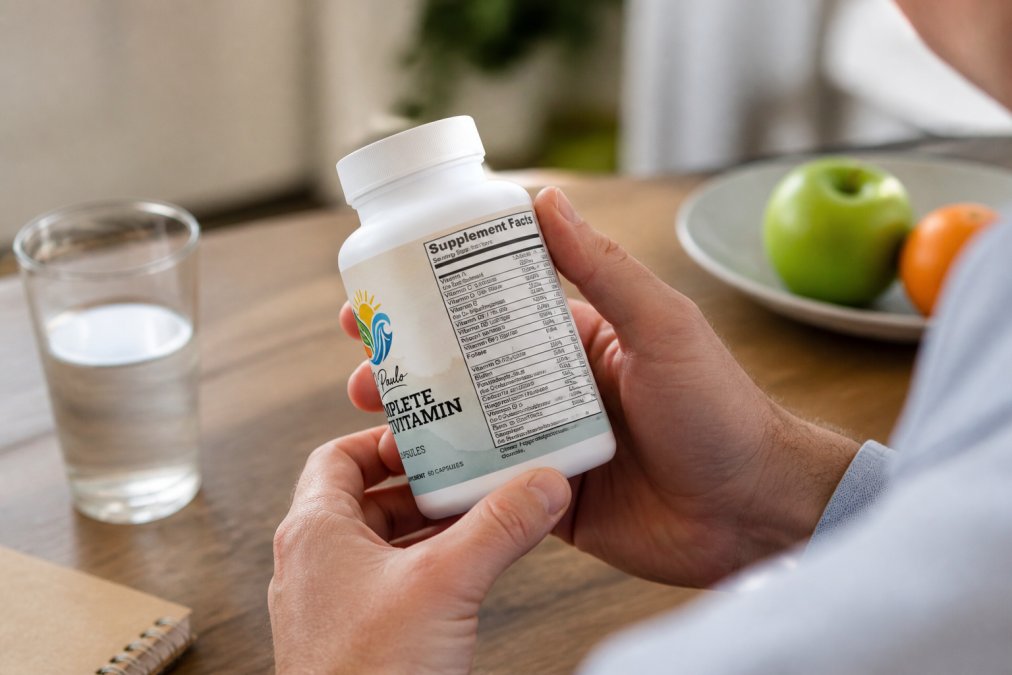
Step 1: Start With the Supplement Facts Panel
The Supplement Facts panel is the legal, standardized section that tells you exactly what's in the bottle. Everything on that panel is regulated, and it's where manufacturers must disclose serving size, ingredient amounts, and daily value percentages.
Identifying serving size and servings per container
Start at the very top of the Supplement Facts panel. The first line states the serving size, and directly below it, the number of servings per container. This matters because all nutrient amounts listed below are based on that serving size.
A bottle might contain 60 capsules but list the serving size as 2 capsules per serving, meaning you're actually getting 30 servings. If you take only one capsule daily thinking you're getting a full dose, you're actually getting half the intended amount. Check this first so you can make an intentional choice rather than discovering mid-way through the bottle that you've been underdosing yourself.
Understanding daily value percentages
Below the serving size, you'll see nutrients with amounts and a column labeled "% Daily Value" (%DV). This percentage tells you how much of the recommended daily intake that nutrient provides based on standard dietary guidelines.
A 100% Daily Value means one serving delivers the full recommended amount. A 50% Daily Value means half that amount. Some nutrients won't have a percentage listed, just the raw amount in milligrams or micrograms.
Daily Value percentages are useful for comparison shopping. If one multivitamin provides 100% of daily value for vitamin D while another provides 25%, you can see immediately which delivers more. Remember: higher isn't always better. Some nutrients are beneficial in specific amounts, and excess intake can be wasteful or problematic.

Pay special attention to nutrients where you're already getting significant amounts from food. If you eat fortified cereals and drink fortified milk, you might already hit your daily value for certain B vitamins before supplementing.
Step 2: Decode the Ingredient List and Understand Proprietary Blends
Below the Supplement Facts panel, you'll find the ingredient list in descending order by weight. This section is where supplement quality becomes visible, or where problems hide.
Active ingredients vs. inactive ingredients
Active ingredients are the compounds you're taking the supplement for. If you're buying a joint support formula, glucosamine and collagen are active ingredients. Inactive ingredients are necessary for the physical product to exist, capsules need gelatin, powders need flow agents, tablets need binders. Common inactive ingredients include cellulose, magnesium stearate, and silicon dioxide.

The quality difference between supplements often comes down to which inactive ingredients manufacturers choose. Some use minimal fillers and stick to simple, recognizable substances. Others load formulas with cheap flow agents and unnecessary additives. J. Paulo's commitment to avoiding cheap fillers means you're paying for a formula optimized for effectiveness, not cost reduction.
Why proprietary blends hide the real amounts
A proprietary blend is a mixture of multiple ingredients listed under a single name with only the total weight disclosed. You see the blend name and total amount (say, "Joint Support Blend, 500mg"), but you don't see how much of each ingredient is actually in there.
Manufacturers claim proprietary blends protect their formulas from competitors. In reality, they're often used to hide inadequate ingredient amounts. A formula might contain 50mg of a key ingredient that research suggests should be 200mg per serving, but buried in a proprietary blend, consumers never notice.
This is a major red flag. When you see a proprietary blend, you cannot accurately assess whether you're getting therapeutic doses. Prefer transparent labeling, where every ingredient and its amount is listed separately. If a manufacturer won't disclose ingredient amounts, there's usually a reason, and it's rarely in your favor.
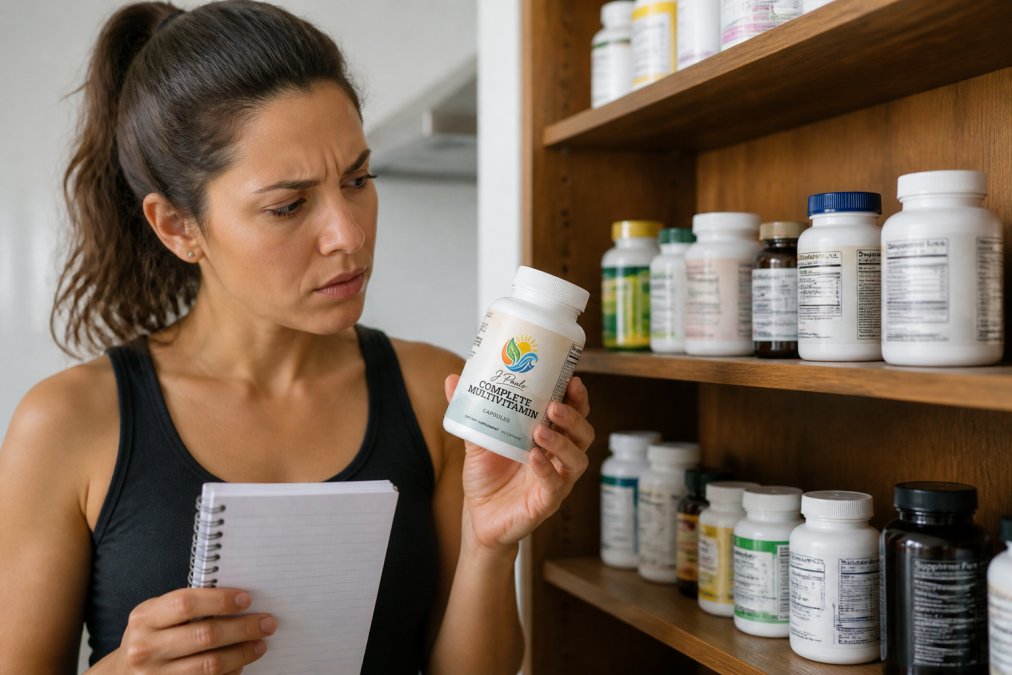
Step 3: Spot Supplement Label Red Flags
Certain label patterns signal low-quality formulations or misleading marketing.
Warning signs of low-quality formulations
Excessive proprietary blends. Any formula relying heavily on proprietary blends rather than transparent ingredient disclosure is hiding something.
Ingredient overload with no clear focus. Some supplements try to address ten different health concerns in a single formula. Targeted formulas should focus on specific outcomes. A joint support supplement that also claims to boost energy, improve digestion, and support skin health is likely underdosing every ingredient.
Extremely low prices. Supplement manufacturing, quality testing, and third-party verification cost money. If a formula is dramatically cheaper than comparable products from reputable brands, corners were cut somewhere.
No manufacturer information or contact details. Legitimate supplement companies list their name, address, and contact information on the label. If you can't find this information, the company is either hiding or doesn't care about accountability.
Vague or absent expiration dates. Every supplement should have a clear expiration date. Some manufacturers print "best by" dates in tiny fonts or use lot numbers without explaining what they mean.
No batch or lot number. Reputable manufacturers print lot numbers on every bottle so they can trace products back to specific manufacturing runs. The absence of a lot number suggests the company doesn't track quality control carefully.
Misleading health claims and structure-function claims
A structure-function claim describes how a nutrient supports normal body structure or function. These are legal. Examples: "Supports healthy bones," "Promotes natural energy," "Helps maintain healthy cholesterol levels already in the normal range."
A health claim suggests the product treats, prevents, cures, or mitigates disease. These are heavily regulated and require FDA approval. If you see language like "Treats arthritis," "Prevents heart disease," or "Cures diabetes," that's an illegal health claim.
When evaluating claims, ask: Is this describing normal body function, or is it suggesting the product treats or prevents disease? If it's the latter, the company is operating outside regulatory guidelines.
Step 4: Verify Third-Party Supplement Testing and Certification
Third-party testing is where supplement quality becomes verifiable. A third-party certifier is an independent organization, not the supplement manufacturer, that tests products for potency, purity, and safety.
What third-party certifications actually mean
Third-party certifiers test whether the product actually contains the ingredients listed in the amounts claimed. They screen for contaminants like heavy metals, bacteria, and pesticides. They verify that fillers and additives are what the label says they are.
The most recognized certifications come from NSF International, USP (United States Pharmacopeia), and ConsumerLab. A product bearing a third-party certification seal means an independent lab confirmed that what's in the bottle matches what's on the label. It doesn't mean the supplement will work for you, it means the manufacturer isn't lying about what's inside.
J. Paulo's commitment to rigorous testing reflects this principle.
How to find certification information on labels
Third-party certification seals are typically printed on the back or side of the supplement bottle. Look for logos from NSF, USP, ConsumerLab, or similar organizations. The seal should include the organization's name and often a reference number you can verify on their website.
If you don't see a certification seal, check the label for text mentioning third-party testing. If there's no mention anywhere on the label, the manufacturer chose not to verify their product independently. This is a significant red flag.
Step 5: Check Cautions, Warnings, and Contraindications
Near the bottom of the label, you'll find a section for cautions and warnings. Cautions typically address who shouldn't take the supplement. Warnings describe potential side effects or safety concerns. Contraindications are situations where you absolutely should not take the supplement.
Read this section carefully, especially if you're on medications or managing health conditions. If you're unsure whether a supplement is safe for your situation, contact the manufacturer using the contact information on the label, or consult your healthcare provider.
Step 6: Review Manufacturer Information and Lot Numbers
The label must include the manufacturer's name, address, and contact information. This information serves two purposes: accountability and traceability.
Accountability: If you have a problem with the product, you need a way to contact the company. Legitimate manufacturers make this easy. If this information is missing, the company is avoiding accountability.
Traceability: The lot number (or batch number) identifies which manufacturing run produced that specific bottle. If a quality issue emerges, manufacturers can identify which lots are affected and issue recalls.
Check the lot number and expiration date together. A manufacturing date or "packaged on" date is also valuable, supplements degrade over time. Fresher is generally better.
How Bioavailability and Ingredient Forms Affect What Your Body Actually Absorbs
Reading a supplement label tells you what's in the bottle. Understanding bioavailability tells you how much of it your body can actually use.
Bioavailability is the percentage of an ingested nutrient that your body absorbs and utilizes. Two supplements might contain identical amounts of the same ingredient, but if one has superior bioavailability, your body absorbs and uses significantly more of it.
The form of an ingredient dramatically affects bioavailability. Vitamin D3 is more bioavailable than vitamin D2. Chelated minerals are absorbed better than non-chelated forms. Standardized herbal extracts deliver more consistent active compounds than whole-plant powders.
A label listing "500mg of ingredient X" doesn't tell you how much your body will actually absorb and use. This is where ingredient quality and form matter enormously. A premium supplement using highly bioavailable forms delivers better results at potentially lower doses than a cheaper supplement using inferior forms.
This is where J. Paulo's focus on rigorous testing and premium formulation shows up in real outcomes. When you choose supplements based on ingredient form and bioavailability, not just ingredient lists, you're investing in what your body can actually use.
Reading supplement labels is the foundation of making smart supplement choices. The label contains all the information you need to distinguish between quality formulations and marketing hype, if you know where to look and what to question.
When you're investing in your health with supplements, especially premium options designed for real results, label transparency matters. J. Paulo's Complete Multivitamin and Gut Health & Digestive Support formulas both use transparent labeling and third-party testing precisely because we believe you deserve to know exactly what you're taking and why it works. Start reading labels with intention, and you'll immediately notice the difference between products built for effectiveness and those built for profit margins.

Frequently Asked Questions
What's the difference between the Supplement Facts label and a Nutrition Facts label?
The Supplement Facts panel is required on dietary supplements and lists active ingredients, serving size, and daily value percentages. The Nutrition Facts label appears on food products. Supplements fall under FDA dietary supplement regulations, not food labeling rules. The Supplement Facts format is specifically designed to show potency and dosage of active ingredients rather than calories and macronutrients.
What are the biggest red flags when reading supplement labels?
Watch for proprietary blends that hide individual ingredient amounts, vague health claims like 'boosts immunity,' missing manufacturer contact information, no expiration date, and absence of third-party testing seals. Also avoid labels with excessive fillers listed before active ingredients, and be wary of 'miracle cure' language. Quality supplements from brands like J. Paulo clearly list every ingredient amount and display third-party certifications prominently.
How do I know if a supplement has been third-party tested?
Look for certification logos on the label from organizations like NSF International, USP (United States Pharmacopeia), or ConsumerLab. These seals indicate the product was tested for purity, potency, and contaminants. The manufacturer's website should also provide testing documentation. Third-party supplement testing verifies that what's on the label is actually in the bottle and free from harmful substances, which is why it's a critical quality indicator.
Should I be concerned about interactions with my medications?
Yes. Always check the cautions and contraindications section on the label, and discuss any new supplement with your doctor or pharmacist, especially if you take blood pressure, cholesterol, or blood-thinning medications. Some ingredients can interfere with medication effectiveness. While the FDA regulates dietary supplements, the burden is on you to verify safety. Premium supplements like those from J. Paulo include clear warning sections, but professional medical advice is essential before starting anything new.
This article was written using GrandRanker