

NOW Foods vs Premium Brands: Quality, Testing & Value
Table of Contents
- NOW Foods vs Premium Brands: A Direct Comparison
- Manufacturing Standards and Third-Party Testing
- Supplements Without Artificial Fillers: What Sets Premium Brands Apart
- Clean Label Supplement Benefits and Why They Matter
- How to Identify High-Quality Vitamins When Comparing Brands
- Pricing Breakdown: Is Premium Worth the Cost?
- Ingredient Sourcing, Bioavailability, and Potency Verification
- Conclusion
Last Updated: August 18, 2026
NOW Foods vs Premium Brands: A Direct Comparison
When you're standing in the supplement aisle, the choice seems simple: grab the affordable option or invest in premium. But the difference between NOW Foods and premium brands like J. Paulo isn't just about price tags. It's about what actually ends up in your body.

NOW Foods has built a reputation on accessible pricing and decent quality. They've been in business since 1968 and manufacture domestically. But premium brands operate under a fundamentally different philosophy: they prioritize third-party testing, ingredient sourcing, bioavailability, and manufacturing standards that go beyond basic compliance. The gap between these approaches matters more than most people realize.
This comparison breaks down exactly where NOW Foods and premium brands diverge. We'll examine manufacturing standards, third-party testing protocols, ingredient sourcing, and whether the premium price tag delivers real value. By the end, you'll understand what you're actually paying for and whether it's worth the difference for your health goals.
Quick Comparison Table
| Aspect | NOW Foods | Premium Brands (J. Paulo) | Key Difference |
|---|---|---|---|
| Manufacturing Location | Domestic (US) | US-manufactured, rigorously tested | Premium brands emphasize testing rigor |
| Third-Party Testing | Standard compliance | Comprehensive potency & purity verification | Premium brands test beyond regulatory minimum |
| Artificial Fillers | May contain common excipients | Formulated without cheap fillers | Clean label focus differs significantly |
| Ingredient Sourcing | Standard suppliers | Verified, transparent sourcing | Premium prioritizes bioavailability |
| Label Accuracy | Meets FDA standards | Guaranteed potency verification | Premium ensures actual vs. claimed potency |
| Price Range | Budget-friendly | Higher investment | Premium reflects testing & sourcing costs |
| Best For | Cost-conscious consumers | Results-focused health enthusiasts | Different target audiences |
Manufacturing Standards and Third-Party Testing
The manufacturing process is where NOW Foods and premium brands diverge most clearly. Both follow Good Manufacturing Practices (GMP), which is the baseline requirement set by the FDA for dietary supplement production. But baseline compliance doesn't tell the full story.
NOW Foods operates within GMP standards, meaning their facilities meet federal requirements for cleanliness, equipment maintenance, and record-keeping. This is necessary but not exceptional. Premium brands like J. Paulo take the next step: they implement additional quality control protocols beyond what regulations demand. This includes more frequent batch testing, stricter contamination screening, and documented verification of every ingredient's potency before it enters the formula.
Third-party testing is where the real separation happens. Many budget brands skip this entirely or conduct minimal testing. NOW Foods does include some third-party verification, but premium brands make it central to their operation. Independent laboratories test finished products for potency (do you actually get what the label claims?), purity (are there contaminants?), and heavy metal screening. This process costs money, and that cost gets reflected in the final price.
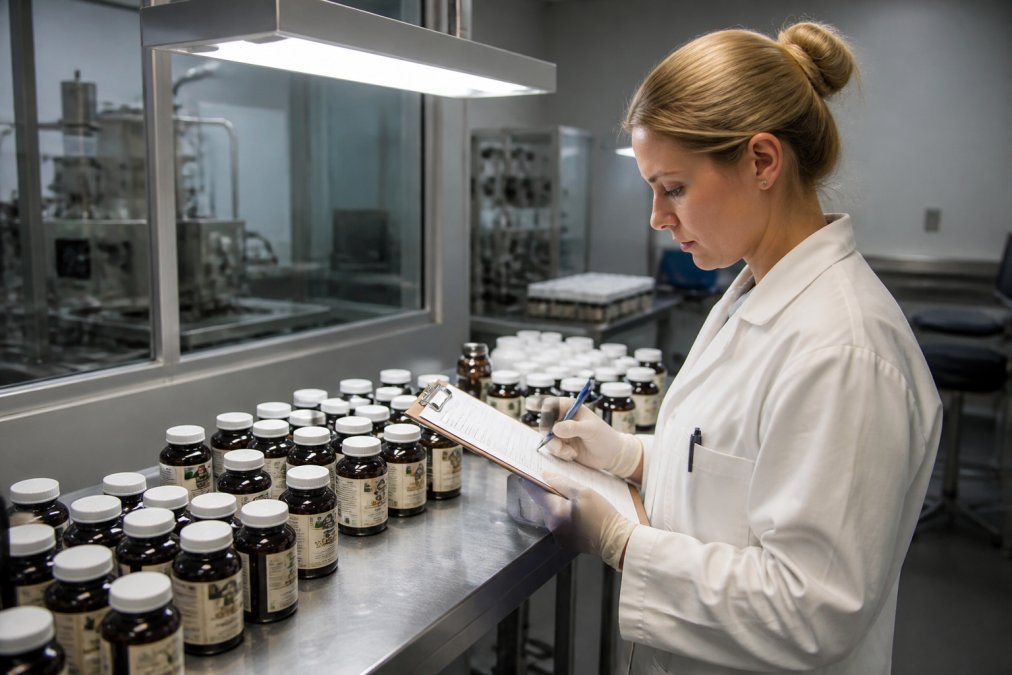
The difference matters in practice. A premium brand's commitment to rigorous testing means you're more likely to get exactly what's on the label. With budget brands, potency can vary batch to batch. Some capsules might contain 80% of the claimed amount; others might hit 120%. That inconsistency means you can't reliably predict results.
Supplements Without Artificial Fillers: What Sets Premium Brands Apart
NOW Foods uses standard excipients and fillers common across the industry: cellulose, magnesium stearate, silicon dioxide, and various binding agents. These aren't toxic, but they're cheap and they add bulk to capsules. The FDA allows them, and they're technically "inactive" ingredients. But if your goal is to minimize what you're ingesting, they matter.
Premium brands approach this differently. J. Paulo formulates products specifically to eliminate cheap fillers. Instead of relying on magnesium stearate (a common flowing agent that some people want to avoid), premium brands use alternatives or reformulate entirely to reduce the need for additives. This requires more sophisticated formulation work and more expensive ingredient sourcing.
The "clean label" movement isn't marketing fluff. It reflects a real preference among health-conscious consumers who've done their research. When you're spending money on supplements, you want the active ingredients doing the work, not filler taking up space. Premium brands understand this and structure their products accordingly.
NOW Foods isn't necessarily bad here; they do offer clean-label options in their product line. But their standard formulas lean on conventional excipients. If you specifically want supplements without artificial fillers, you'll need to read their labels carefully. Premium brands make this a default position, not an exception.
Clean Label Supplement Benefits and Why They Matter
Understanding clean label benefits requires understanding what happens when you ingest unnecessary fillers. Magnesium stearate, for example, is a lubricant used in capsule production. It's safe in small amounts, but some research suggests it may affect nutrient absorption. Silicon dioxide (silica) is used as an anti-caking agent. Again, safe, but not something you need to be consuming daily if you don't have to.
The real benefit of clean labels isn't that standard fillers are dangerous. It's that they're unnecessary. Your supplement should contain the active ingredients you're paying for, nothing else. When a brand commits to clean formulation, it signals they've done the work to make the formula efficient. They're not hiding behind filler; they're standing behind their active ingredients.
This matters especially for people with sensitive digestion or those taking multiple supplements daily. Every unnecessary additive is another thing your body processes. Multiply that across several supplements, and you're asking your digestive system to work harder than necessary. Premium brands recognize this and design accordingly.
People who switch from standard to clean-label supplements often report noticing the difference. Not because the active ingredients are different, but because they're not competing with fillers for absorption. Bioavailability improves when you eliminate the noise.
How to Identify High-Quality Vitamins When Comparing Brands
The label is your first checkpoint. Read it like a detective. High-quality brands list ingredients clearly, specify the exact form of each nutrient (e.g., "methylcobalamin" instead of just "vitamin B12"), and include third-party certification marks. Look for NSF, USP, or ConsumerLab certification logos. These aren't mandatory, but their presence tells you the brand paid for independent verification.
Check the "Other Ingredients" section carefully. If it's long and filled with names you can't pronounce, that's a sign of heavy filler use. Premium brands keep this section minimal. J. Paulo's approach is straightforward: active ingredients plus minimal necessary additives.

Potency verification is your second checkpoint. A high-quality brand will state the exact amount of each active ingredient in standardized units. "Vitamin C 1000mg" is clear. "Vitamin C from rose hips extract" is vague, you don't know how much actual vitamin C you're getting. Premium brands specify both the ingredient and the standardized amount.
Research the brand's testing practices. Call them or check their website. Ask: Do they conduct third-party testing? What contaminants do they screen for? How often do they test batches? Brands confident in their quality will answer these questions directly. They'll provide test results or direct you to where you can find them.
Price is a consideration, but not the primary one. Budget brands can be good; premium brands can be overpriced. The key is matching the price to actual quality markers. If a premium brand costs twice as much but offers third-party testing, verified potency, and clean formulation, that's justified. If it costs twice as much and offers only marketing, that's not.
Pricing Breakdown: Is Premium Worth the Cost?
NOW Foods prices most of their standard supplements between $7 and $15 per bottle. J. Paulo's Complete Multivitamin starts at $19.95. Their Gut Health & Digestive Support runs $24.95. Their Joint Support is $27.95. On the surface, the premium brands cost 50-100% more. But that comparison ignores what you're actually paying for.
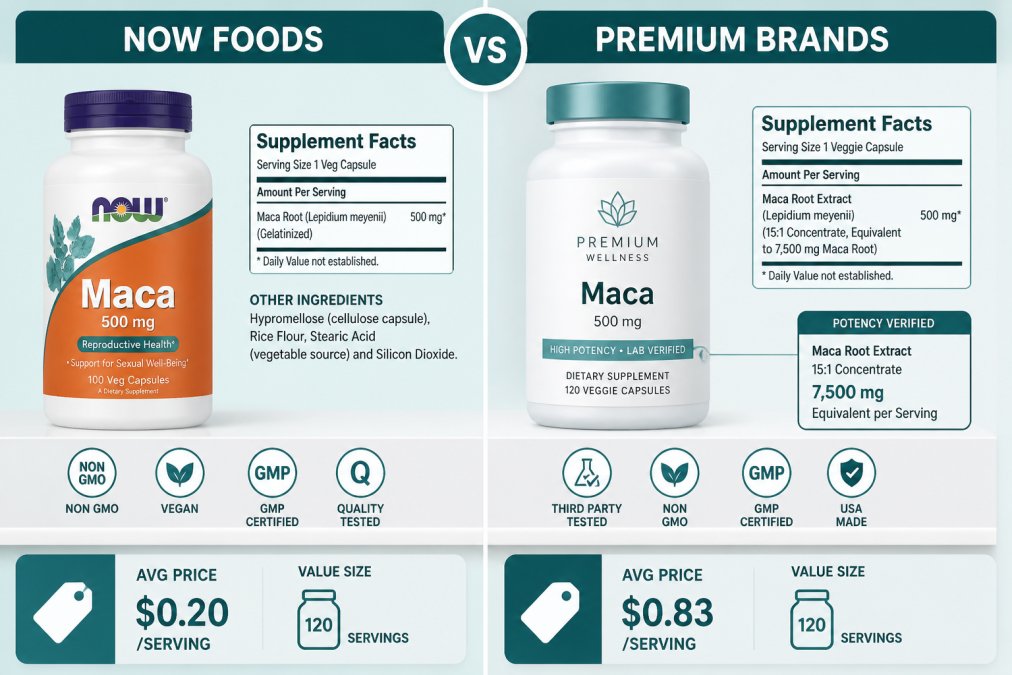
The cost difference reflects several factors. Premium brands invest in third-party testing, each batch tested independently costs money. Ingredient sourcing is more expensive when you prioritize bioavailability and purity over the cheapest available option. Formulation work to eliminate fillers requires more sophisticated chemistry. Manufacturing oversight is stricter. These costs accumulate.
More importantly, premium brands typically offer higher potency or more comprehensive formulas. J. Paulo's Complete Multivitamin includes botanicals like echinacea, spirulina, and green tea extract alongside standard vitamins. That's not just a multivitamin; it's a multivitamin plus immune and antioxidant support. NOW Foods' standard multivitamin is just vitamins and minerals. Same category, different scope.
The value question becomes: will you actually use the supplement consistently, and will you notice results? If a $15 bottle of NOW Foods sits in your cabinet unused because you're skeptical it works, you've wasted $15. If a $25 bottle of J. Paulo delivers noticeable results, better digestion, more sustained energy, improved joint mobility, then the premium price becomes an investment in your health, not an expense.

For people with specific health goals, premium brands often deliver better ROI. Someone struggling with digestive discomfort who tries NOW Foods and sees no change has wasted money. That same person trying J. Paulo Gut Health & Digestive Support, formulated with probiotics, prebiotics, and digestive enzymes, might actually feel the difference. The premium price justified by results beats the budget price wasted on ineffective products.
Ingredient Sourcing, Bioavailability, and Potency Verification
This is where premium brands separate themselves most clearly from budget options. Ingredient sourcing isn't just about "where did you buy this ingredient." It's about form, purity, and whether the ingredient can actually be absorbed by your body.
Consider vitamin B12. Budget brands often use cyanocobalamin, the cheapest form. Your body has to convert it to methylcobalamin to use it. Premium brands use methylcobalamin directly, the form your body actually uses. That's bioavailability. You absorb more of what you consume because the form is optimized for human metabolism.
Or look at turmeric. Budget supplements use standard turmeric powder, which contains about 3% curcumin (the active compound). Your body absorbs maybe 5-10% of what you ingest because curcumin is fat-soluble and poorly absorbed. Premium brands use standardized curcumin extracts, 40%, 60%, or even 95% curcumin concentration. Same ingredient, vastly different bioavailability. You get actual therapeutic doses instead of mostly filler.
Potency verification is the guarantee that what's on the label is what's in the bottle. Budget brands assume they got it right during manufacturing. Premium brands verify it. Every batch of J. Paulo's supplements is tested to confirm potency. If a label says 1000mg, testing confirms it's actually 1000mg (within acceptable variance), not 800mg or 1200mg.
This matters because your body adapts to consistent doses. If your supplement potency varies batch to batch, your results vary too. You can't build a reliable routine with inconsistent products. Premium brands solve this through verification.
The sourcing difference also extends to supply chain transparency. Premium brands can tell you where their ingredients come from, how they're processed, and what quality standards suppliers must meet. Budget brands often can't, they buy from the cheapest available source each quarter. That inconsistency affects both potency and safety.
Conclusion
The choice between NOW Foods and premium brands like J. Paulo isn't about one being "good" and the other "bad." It's about what you're optimizing for. If you want the lowest possible price and are willing to accept average quality, NOW Foods delivers that. If you want supplements that actually work, formulated with bioavailability in mind, tested for potency and purity, and free from unnecessary fillers, premium brands justify their cost.
For health-conscious adults serious about results, J. Paulo delivers US-manufactured supplements rigorously tested to provide real, tangible benefits. Whether you're seeking appetite balance, improved digestion, joint support, or overall wellness, J. Paulo's clean-label formulas are designed without cheap fillers or weird additives. Start with J. Paulo Complete Multivitamin as your foundation, or explore J. Paulo Gut Health & Digestive Support if digestive comfort is your priority. Experience the difference that rigorous testing and premium sourcing actually deliver.
Frequently Asked Questions
Are NOW Foods supplements good quality?
NOW Foods maintains Good Manufacturing Practices (GMP) certification and conducts third-party testing on many products. However, premium brands typically invest more heavily in advanced testing protocols, including bioavailability studies and contaminant screening. NOW Foods competes on value and accessibility rather than premium positioning. The quality difference often comes down to ingredient sourcing, potency verification, and manufacturing transparency, areas where premium brands typically spend more.
What should I look for in a clean label supplement?
A clean label supplement should list only active ingredients and minimal, recognizable excipients. Look for third-party testing certifications (NSF, USP, or ConsumerLab), GMP manufacturing compliance, and transparent ingredient sourcing. Avoid products with artificial fillers, synthetic dyes, or unnecessary additives. Check the label for potency verification statements and batch testing documentation. Premium brands often provide detailed supply chain transparency and explain why each ingredient is included.
Why are NOW Foods supplements cheaper than premium brands?
NOW Foods achieves lower pricing through higher-volume production, simpler formulations, and lower overhead in testing and marketing. Premium brands invest more in advanced manufacturing standards, comprehensive third-party testing, bioavailability research, and ingredient sourcing verification. They also conduct clinical efficacy studies and maintain stricter quality assurance protocols. The price difference reflects these operational choices, not necessarily product safety, though premium brands typically offer greater potency verification and purity assurance.
How does third-party testing impact supplement reliability?
Third-party testing verifies label accuracy, screens for heavy metals and contaminants, and confirms potency of active ingredients. Independent laboratories test for adulteration and ensure products meet claimed specifications. Brands that pursue third-party certification demonstrate commitment to regulatory compliance and consumer protection. Premium brands often test every batch; budget brands may test selectively. This testing directly impacts whether you receive the potency stated on the label and whether the product is free from harmful contaminants.
Ready to upgrade your supplement routine? J. Paulo's exclusive pricing makes superior health accessible. Get started today and feel the difference that clean-label, rigorously tested supplements can make in your wellness journey.
This article was written using GrandRanker