

Clean Label Supplements for Women: What to Look For
Table of Contents
- What "Clean Label" Actually Means for Supplements
- Why Women Need Clean Label Supplements: Hidden Contaminants
- Key Criteria for Choosing Clean Label Supplements for Women
- Top Picks: Third-Party Tested Supplements for Women
- Our Criteria for Selecting These Supplements Without Artificial Fillers
- How to Read Supplement Labels Like a Pro
- The Bottom Line: Prioritizing Purity in Your Wellness Routine
- Frequently Asked Questions
Last Updated: September 5, 2026
What "Clean Label" Actually Means for Supplements
A clean label supplement is one with a short, recognizable ingredient list, free from synthetic additives, artificial fillers, and unnecessary binders. For women comparing options, the term signals a commitment to nutritional integrity, but because it is a voluntary certification rather than a legal standard, the actual meaning varies widely between brands. This guide from J. Paulo breaks down what clean label supplements for women really require, how to spot hidden contaminants, and which third-party tested options are worth your money.

The dietary supplement regulation landscape in the United States does not formally define "clean," which means the burden falls on you to evaluate purity standards, ingredient sourcing, and manufacturing standards yourself.
Why Women Need Clean Label Supplements: Hidden Contaminants
The gap between what a label claims and what a bottle contains is wider than most shoppers realize. Independent testing by organizations like the Clean Label Project and ConsumerLab.com regularly detects heavy metals, pesticide residues, and plasticizers in finished products, even those marketed as natural. These contaminants accumulate through soil, water, and processing equipment, and they pose a particular concern for women because they can disrupt hormonal balance and metabolic health over time.
Heavy metals like lead, cadmium, arsenic, and mercury are the most well-documented contaminants. Lead can accumulate in bone tissue, where it mimics calcium and can be released during periods of high bone turnover, such as pregnancy and menopause. Cadmium, often found in rice-based protein powders, has a half-life of 15 to 30 years and is a known endocrine disruptor (peer-reviewed research). Arsenic, which can contaminate brown rice syrup used as a sweetener, has been linked to impaired glucose metabolism and cardiovascular risk.
Pesticide residues present a second layer of concern. Organophosphate pesticides, still widely used in conventional agriculture, have been shown in epidemiological studies to disrupt thyroid hormone production. Because thyroid hormones regulate metabolism, body temperature, and reproductive function, even low-level chronic exposure can manifest as fatigue, weight gain, or irregular menstrual cycles in susceptible women.
Plasticizers such as phthalates and bisphenol A (BPA) represent a third, often overlooked contaminant class. These compounds can leach from plastic packaging or processing equipment into the finished product. Phthalates are particularly concerning for women because they are anti-androgenic and have been associated with earlier puberty onset and disrupted follicular development. A 2019 study published in Environmental Research found that women with higher urinary phthalate metabolites had significantly lower levels of anti-Müllerian hormone, a marker of ovarian reserve (PubMed).
The regulatory reality compounds these risks. Under the Dietary Supplement Health and Education Act of 1994 (DSHEA), the FDA does not require pre-market approval for dietary supplements (the FDA). Manufacturers are responsible for ensuring their products are safe, but the FDA only intervenes after a problem is identified through adverse event reports or post-market surveillance.
The FDA does set contaminant limits for some substances, but these are often based on general food safety standards rather than supplement-specific exposure scenarios. For example, the FDA's action level for lead in candy is 0.1 parts per million, but there is no equivalent enforceable standard for dietary supplements.
Contaminant screening is an additional expense that many manufacturers skip. A 2021 investigation by the California Department of Public Health found that nearly 20 percent of tested supplements contained undeclared pharmaceutical ingredients or contaminants above state Proposition 65 thresholds.
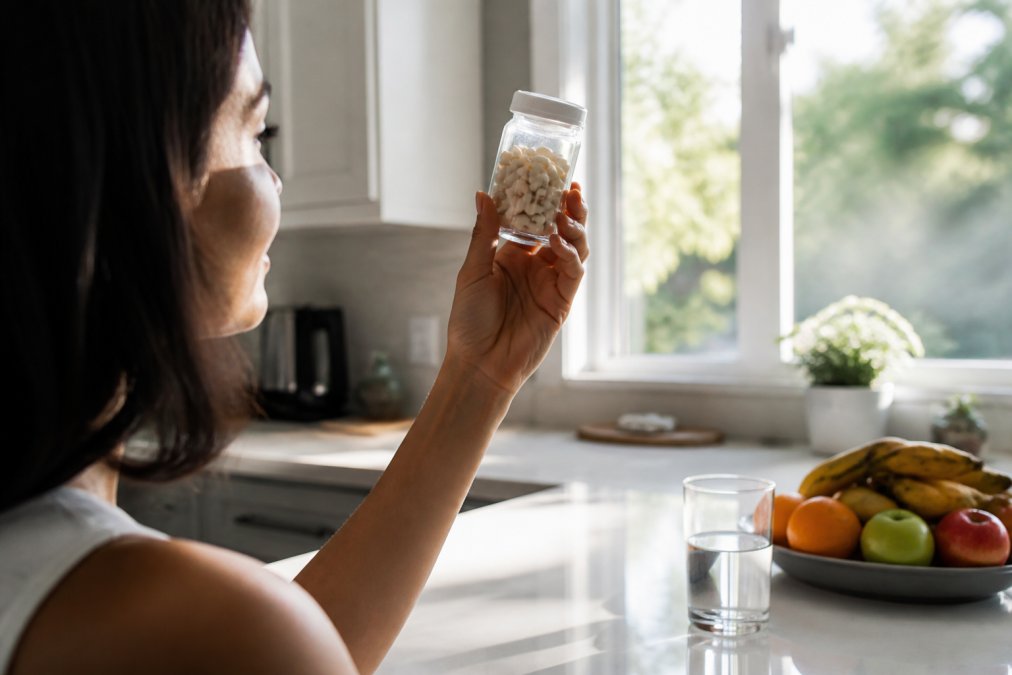
The most rigorous brands also check for adulteration, microbial contamination, and residual solvents, then publish those results. If a company cannot show you its contaminant screening data, you are buying on faith rather than evidence.
Unlike a single contaminated meal, a daily supplement creates a chronic exposure pathway. If a multivitamin contains trace amounts of lead, taking it every day for years creates a steady-state body burden that would not occur from occasional dietary exposure.
Key Criteria for Choosing Clean Label Supplements for Women
When you strip away the marketing, four criteria separate genuinely clean products from those using the term as a label. These are third-party testing, ingredient sourcing, manufacturing standards, and formulation compliance. A product that passes all four is rare; most fail on at least one.
Third-Party Testing Standards
Third-party testing means an independent laboratory, not the manufacturer, verifies what is in the bottle. This is the single most reliable signal of supplement safety, because it removes the conflict of interest inherent in self-testing. Look for brands that test every batch and make the certificates of analysis available before you buy, not just on request.
Many brands run in-house quality checks and call it testing. Independent labs provide an objective check on purity standards and label accuracy.
Ingredient Sourcing and Manufacturing Standards
Ingredient sourcing determines the starting quality of a supplement, and manufacturing standards determine what survives production. Whole-food based ingredients generally carry more naturally occurring phytonutrients than synthetic isolates, but they also require more careful handling to preserve those compounds.
Clean manufacturing avoids synthetic additives, artificial colors, and unnecessary flow agents, which means the final capsule contains the active ingredients and little else.
The Missing Criterion: Bioavailability vs. Purity
Here is where most clean label guides stop, and where they fail you. Purity tells you what is NOT in the pill. Bioavailability tells you whether what IS in the pill will actually work.
The uncomfortable truth is that purity and bioavailability often trade off against each other. The cheapest, most stable forms of many minerals are also the least absorbable. Magnesium oxide, for example, is inexpensive and stable, but your body only absorbs about 4 percent of it. Magnesium citrate, glycinate, or malate are absorbed two to three times better, but they are more expensive and more hygroscopic.
This trade-off matters clinically. If you take 200 mg of magnesium oxide, your body might absorb only 8 mg, far below the 100 mg you would get from a well-absorbed form.
A similar pattern plays out with other nutrients. Folic acid requires enzymatic conversion in the liver before it becomes active. Up to 40 percent of women have a genetic variant (MTHFR C677T) that reduces this conversion efficiency. Methylfolate, the active form, bypasses this step entirely but is more expensive and less stable.
Iron presents another example. Ferrous sulfate is the standard form found in most multivitamins, it is cheap and stable. But it is also poorly absorbed and frequently causes gastrointestinal distress. Ferrous bisglycinate, a chelated form, is gentler on the stomach and absorbed more efficiently.
When evaluating a clean label supplement, ask two questions simultaneously: what is NOT in it, and are the nutrient forms in it the ones your body can actually use?
Formulation Compliance: The Dose Reality Check
The fourth criterion is formulation compliance, does the product contain clinically meaningful doses of each ingredient? Many clean label products fail here because they contain token amounts of trendy ingredients. A supplement with 10 mg of a botanical that clinical research shows requires 300 mg for efficacy is clean but useless.
This is where proprietary blends become a red flag. When a manufacturer hides individual ingredient amounts behind a "proprietary blend" label, you cannot verify whether you are getting an effective dose or a pinch of powder. The FDA requires that the total weight of the blend be listed, but not the individual components.
A genuinely clean supplement shows its work. It lists specific amounts for every active ingredient, uses bioavailable forms, and explains why those forms were chosen. If a brand cannot articulate why it chose magnesium citrate over oxide, it is likely using the cheaper form to protect margins.
The Four-Criteria Checklist in Practice
When you evaluate a supplement, run it through all four criteria simultaneously. A product that is third-party tested but uses poorly absorbed ingredient forms is a partial pass. Only a product that clears all four hurdles, independent verification, clean sourcing, bioavailable formulation, and transparent dosing, deserves your daily commitment.
This framework is more demanding than the simple "short ingredient list" heuristic, but it is also more accurate. A short ingredient list tells you nothing about whether those ingredients are present in effective amounts or absorbable forms.
Top Picks: Third-Party Tested Supplements for Women
Our top pick for women seeking clean label supplements is J. Paulo, a US-manufactured line that prioritizes rigorous testing and excludes cheap fillers and artificial additives across its catalog. The brand's approach to formulation compliance means each product targets a specific wellness outcome without the ingredient bloat common in cheaper alternatives.
For foundational daily nutrition, J. Paulo Complete Multivitamin at $19.95 delivers a full-spectrum formula in a single capsule, combining a vitamin B complex, immune-supporting botanicals, and nutrient-dense superfoods like spirulina. The micronutrient density here replaces the need for multiple single-nutrient pills, which matters for women already managing a full supplement routine.
Women focused on appetite balance and weight support will find the J. Paulo Appetite Balance & Weight Support Strips at $28.95 particularly effective. The once-daily oral strip uses saffron extract to reduce snacking and emotional eating, while chromium supports healthy blood sugar balance, a key factor in managing cravings. The fast-dissolving format eliminates the pill fatigue that derails consistency.

For digestive health, which directly affects how well your body absorbs every other nutrient, J. Paulo Gut Health & Digestive Support at $24.95 combines clinically relevant probiotics, prebiotic fiber, and a complete digestive enzyme complex. This addresses bloating and discomfort at the source while building a thriving gut microbiome, supporting both metabolic health and overall wellness.
| Product | Price | Primary Benefit | Best For |
|---|---|---|---|
| J. Paulo Complete Multivitamin | $19.95 | Full-spectrum daily nutrition | Foundational daily coverage |
| J. Paulo Appetite Balance Strips | $28.95 | Cravings and appetite control | Weight management support |
| J. Paulo Gut Health | $24.95 | Digestion and nutrient absorption | Reducing bloating, gut health |
| J. Paulo NMN | $39.95 | Cellular energy and healthy aging | Longevity-focused women |
Our Criteria for Selecting These Supplements Without Artificial Fillers
Every product above passed the same evaluation framework we use for all recommendations, built around five non-negotiable checks. First, the formula must be free from artificial fillers, meaning no magnesium stearate, no titanium dioxide, and no synthetic dyes. Second, every active ingredient must appear at a clinically meaningful dose.
Third, the product must be third-party tested for heavy metals, pesticide residues, and microbial contamination. Fourth, the manufacturing facility must follow current good manufacturing practices. Fifth, the label must be transparent, listing exact amounts rather than hiding behind proprietary blends.
A clean product with poorly absorbed ingredients delivers less benefit than a slightly less pure product with highly bioavailable forms. This is why we prioritize brands that use clinically validated ingredient forms.
How to Read Supplement Labels Like a Pro
Start with the Supplement Facts panel, not the front of the bottle, because the front is marketing and the panel is regulatory.
Check the serving size first, then verify that each active ingredient has a specific amount listed. Cross-reference those amounts against clinical research to confirm they are effective doses. Then scan the "Other Ingredients" section, where fillers, binders, and artificial additives are disclosed.
The label literacy guide below summarizes what to look for at each step of your evaluation:
| Label Element | What to Look For | What to Avoid |
|---|---|---|
| Supplement Facts panel | Specific amounts for each ingredient | Proprietary blends hiding doses |
| Other Ingredients | Short list, recognizable names | Magnesium stearate, titanium dioxide |
| Ingredient forms | Bioavailable versions (citrate, glycinate) | Cheap forms (oxide, synthetic isolates) |
| Testing disclosure | Third-party certificates available | Vague "tested" claims without proof |
| Manufacturing info | US facility, current GMP compliance | No facility disclosure |
Every time you consider a new supplement, run it through this same checklist rather than relying on brand reputation alone.
The Bottom Line: Prioritizing Purity in Your Wellness Routine
Clean label supplements for women are not a luxury category; they are a safety decision. When you consume a supplement daily, its contaminant profile and ingredient quality affect you cumulatively, which makes the extra scrutiny worthwhile.
You get what you pay for with health. J. Paulo delivers rigorously tested, US-manufactured supplements without cheap fillers or weird additives, backed by exclusive pricing that makes premium quality accessible. Whether you are addressing appetite balance, digestive comfort, or foundational daily nutrition, the J. Paulo line offers clean label supplements for women that produce real results you can feel. Get started with J. Paulo and feel the difference in your daily wellness routine.

Frequently Asked Questions
What does 'clean label' actually mean for dietary supplements?
A clean label means a supplement contains only the ingredients needed for its stated purpose, without artificial fillers, colors, or preservatives. For women, this translates to products that prioritize whole-food based ingredients and avoid synthetic additives. You should see recognizable ingredients on the label, and the formula should be free of unnecessary binders and flow agents that add no nutritional value but increase the pill's bulk.
How do I verify third-party testing for supplement purity?
Look for a seal from an independent organization like NSF International, USP, or Informed Choice on the product label. This certification means the product has undergone voluntary testing for purity standards, including screening for heavy metals, pesticide residues, and other contaminants. You can also visit the certifying body's website to confirm the brand's certification is current. This testing provides verification that what's on the label matches what's in the bottle.
What common additives should women avoid in supplements?
Be cautious of magnesium stearate, titanium dioxide, artificial colors (like FD&C Red 40), and hydrogenated oils, which are often used as cheap fillers. Also, watch for proprietary blends that don't disclose individual ingredient amounts. Choosing supplements without artificial fillers ensures you're getting the full dose of active nutrients. Look for labels that list each ingredient with its specific amount, ensuring label transparency and supporting your body's nutritional integrity.
Are clean label supplements safer than standard supplements?
Clean label supplements are generally a better choice because they minimize your exposure to unnecessary chemicals and potential contaminants. The focus on third-party testing and contaminant screening addresses concerns about heavy metals and pesticide residues often found in less rigorously sourced products. While the FDA regulates dietary supplements for good manufacturing practices, clean label brands often go further with voluntary certification and stricter in-house quality assurance to ensure a safer, more effective product.
This article was written using GrandRanker