

Natural Ways to Improve Digestion: A 2026 Guide
Table of Contents
- Signs of Poor Digestion You Should Not Ignore
- Foods for Better Digestion: What to Eat and Why
- Natural Ways to Improve Digestion Through Daily Habits
- How to Fix Bloating Naturally
- The Gut-Brain Axis: Stress, Sleep, and Digestion
- Two Angles Most Guides Miss: Medication Interactions and Food Sensitivity Testing
- Natural Ways to Improve Digestion With Targeted Supplements
- Conclusion
Last Updated: August 11, 2026
Poor digestion affects far more adults than most people realize, showing up not just as occasional discomfort but as a persistent drag on energy, mood, and overall health. This guide covers the most effective natural ways to improve digestion, grounded in how your gastrointestinal tract actually works.
Signs of Poor Digestion You Should Not Ignore
Poor digestion is the pattern of persistent symptoms that signal your gastrointestinal tract is struggling to break down, absorb, or move food efficiently. Common signs include chronic bloating, irregular bowel movements, constipation, excessive gas, heartburn, and a heavy feeling after meals.
Poor digestion often shows up in places that seem unrelated to the gut. Skin issues, fatigue, brain fog, and mood changes are all connected to the gut-brain axis, the bidirectional communication network linking your digestive system to your central nervous system.
Signs that deserve attention:
- Bloating that persists more than an hour after eating
- Fewer than three bowel movements per week (or more than three per day)
- Stools that are consistently hard, loose, or difficult to pass
- Undigested food visible in stool
- Chronic nausea after meals
- Heartburn occurring more than twice per week
Foods for Better Digestion: What to Eat and Why
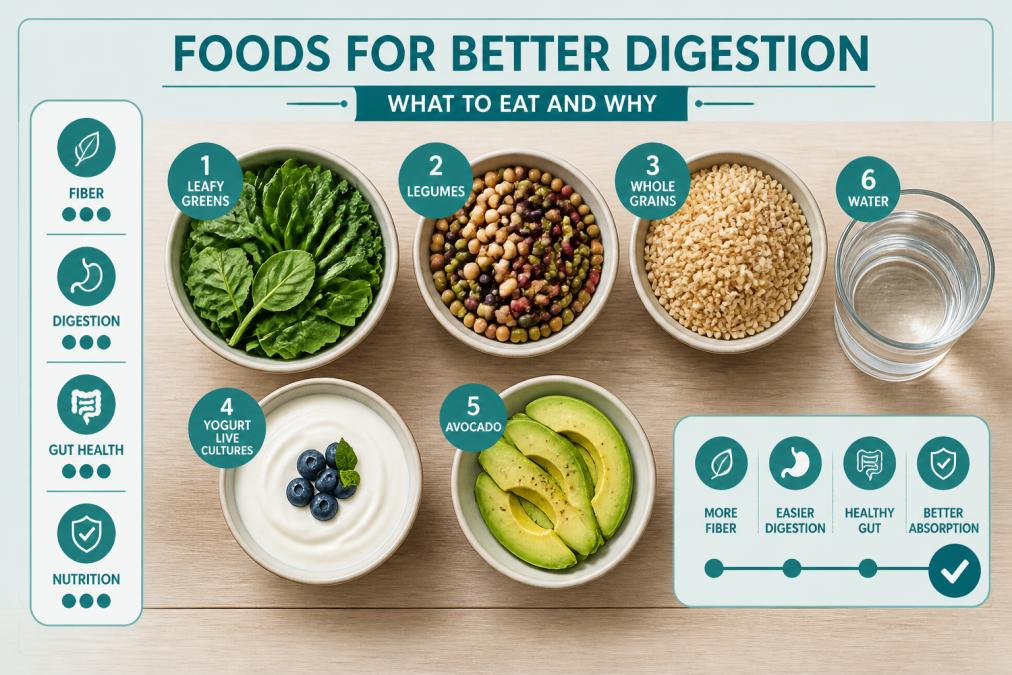
The fastest way to improve digestion is to change what you eat. Food is the primary input your digestive system processes all day, and the right choices directly support gut flora diversity, digestive enzyme production, and bowel regularity.
High-Fiber Choices That Keep Things Moving
Fiber intake is the single most impactful dietary variable for digestive regularity. Fiber adds bulk to stool, feeds beneficial gut bacteria, and speeds transit time through the colon, reducing constipation and inflammation.
According to dietary fiber guidelines from the Academy of Nutrition and Dietetics, most adults fall well short of recommended daily fiber intake.
Practical fiber sources to prioritize:
- Legumes: Lentils, black beans, and chickpeas deliver some of the highest fiber concentrations per serving
- Cruciferous vegetables: Broccoli, Brussels sprouts, and kale feed gut bacteria while providing prebiotic compounds
- Whole grains: Oats, barley, and brown rice support regularity better than refined counterparts
- Berries and pears: High in soluble fiber, which improves nutrient absorption
Add fiber gradually over two to three weeks and increase water intake alongside it, or you'll trade constipation for bloating.
Fermented Foods and Probiotics for a Healthier Microbiome
Fermented foods introduce live beneficial bacteria directly into your digestive system, supporting a diverse microbiome linked to better digestion, immune function, and mood regulation.
The most accessible options:
- Yogurt with live cultures: Look for "live and active cultures" on the label
- Kefir: A fermented milk drink with a broader range of probiotic strains than most yogurts
- Sauerkraut and kimchi: Fermented vegetables that also deliver prebiotic fiber
- Kombucha: A fermented tea that supports digestive wellness
- Miso and tempeh: Fermented soy products that work well in savory dishes
Prebiotics matter as much as probiotics. Garlic, onions, leeks, asparagus, and bananas are excellent prebiotic sources. Combining fermented foods with prebiotic-rich vegetables creates a synergistic effect on gut flora diversity.
Healthy Fats and Lean Proteins That Support Gut Function
Healthy fats from avocados, olive oil, and fatty fish support bile production, which your body uses to break down dietary fats and absorb fat-soluble vitamins. Lean proteins, including chicken, turkey, fish, eggs, and plant-based options like tofu, are easier on the gastrointestinal tract than high-fat processed meats.
Build meals around a lean protein base, add healthy fats in moderate amounts, and let vegetables and whole grains fill the rest of the plate. This structure supports steady digestive enzyme production and prevents blood sugar swings that trigger gut distress.
Natural Ways to Improve Digestion Through Daily Habits
Food choices matter, but habits determine whether those food choices actually work. The most overlooked natural ways to improve digestion are behavioral, not dietary.
Hydration: How Much Water Your Gut Actually Needs
Adequate hydration is essential for digestion because water breaks down food, moves waste through the colon, and prevents constipation. Without enough fluid, even a high-fiber diet can backfire.
As noted in hydration and digestive health guidance from the National Institutes of Health, fluid needs vary by body size, activity level, and climate, but most adults benefit from consistent water intake throughout the day.
Practical hydration habits:
- Drink a glass of water 30 minutes before each meal to prime digestive secretions
- Carry a water bottle and refill it at least twice during the workday
- Limit alcohol and excessive caffeine, both of which dehydrate and irritate the gut lining
- Herbal teas, particularly ginger and peppermint, count toward fluid intake and provide additional digestive support
Mindful Eating, Chewing, and Portion Control
Chewing is where digestion actually begins. Saliva contains digestive enzymes that start breaking down carbohydrates before food reaches the stomach. When you swallow large, poorly chewed pieces, you send your stomach and small intestine a harder job than they're designed for.
Mindful eating means slowing down enough to taste and chew your food, eating without screens, and stopping when satisfied rather than full. Try chewing each bite 20 to 30 times before swallowing.
Physical Activity and Post-Meal Movement
Regular physical activity speeds gut motility, helping food move through your digestive system at a healthy pace. Even moderate exercise, like a 30-minute walk most days, makes a measurable difference in bowel regularity.
A 10 to 15 minute walk after eating, particularly after dinner, helps the stomach empty more efficiently and reduces blood sugar spikes. This isn't vigorous exercise; it's gentle movement that keeps the gastrointestinal tract active during the critical window after a meal.
How to Fix Bloating Naturally
Bloating is the most common digestive complaint, and it almost always has a correctable cause. Bloating occurs when gas accumulates in the gastrointestinal tract faster than the body can release it, often due to swallowed air, fermentation of poorly digested food, or an imbalanced gut microbiome.
The most effective natural fixes, in order of impact:
- Slow down eating to reduce swallowed air
- Identify trigger foods such as carbonated drinks, high-FODMAP vegetables like onions and cauliflower, and artificial sweeteners
- Add digestive enzymes before meals containing lactose, gluten, or complex carbohydrates
- Take a post-meal walk to stimulate gut motility and gas release
- Reduce sodium intake, which causes water retention that worsens bloating
- Try peppermint tea after meals, which relaxes the smooth muscle of the gastrointestinal tract

| Bloating Cause | Natural Fix | Timeline to Notice Improvement |
|---|---|---|
| Eating too fast | Chew 20-30 times per bite | 1-3 days |
| High-FODMAP foods | Eliminate and reintroduce | 1-2 weeks |
| Low gut motility | Daily post-meal walks | 3-7 days |
| Imbalanced microbiome | Add fermented foods daily | 2-4 weeks |
| Digestive enzyme deficiency | Enzyme supplement before meals | 1-3 days |
The Gut-Brain Axis: Stress, Sleep, and Digestion
The gut-brain axis is the bidirectional communication network between the enteric nervous system in your gut and your central nervous system. Chronic stress elevates cortisol, which directly disrupts gut motility, increases intestinal permeability, and alters gut flora composition, as detailed in research on the gut-brain connection published by Harvard Medical School.
Your gut follows a circadian rhythm just like the rest of your body. Eating late at night, irregular sleep schedules, and insufficient sleep all disrupt digestive enzyme release and gut motility. Adults who sleep fewer than seven hours consistently report higher rates of constipation, bloating, and gastrointestinal discomfort.
Practical stress and sleep strategies:
- Establish a consistent sleep and wake time, even on weekends
- Avoid eating within two to three hours of bedtime to allow gastric emptying before sleep
- Practice diaphragmatic breathing or brief meditation after meals to activate the parasympathetic nervous system
- Limit screen exposure in the hour before bed, which disrupts melatonin and circadian rhythm
Two Angles Most Guides Miss: Medication Interactions and Food Sensitivity Testing
Your medications may be the reason your gut isn't responding to lifestyle changes. Common medications that affect digestion include:
- NSAIDs (ibuprofen, naproxen): Irritate the stomach lining and increase intestinal permeability
- Antibiotics: Disrupt gut flora, often causing diarrhea and bloating for weeks after the course ends
- Proton pump inhibitors: Reduce stomach acid, which impairs protein digestion and can allow bacterial overgrowth
- Antidepressants and antipsychotics: Many affect gut motility directly through serotonin pathways
- Blood pressure medications: Some calcium channel blockers cause constipation
If you're on any of these and struggling with digestion, discuss it with your prescribing physician before spending money on supplements.
Food sensitivity testing is the other underused tool. Unlike true food allergies, sensitivities cause delayed, low-grade inflammation that shows up as bloating, brain fog, fatigue, or irregular bowel habits hours or days after eating the trigger food. An elimination diet is the most reliable and cost-effective starting point. Remove the most common triggers, including gluten, dairy, eggs, soy, and corn, for three to four weeks, then reintroduce them one at a time while tracking symptoms.
Natural Ways to Improve Digestion With Targeted Supplements
Lifestyle changes form the foundation, but targeted supplementation can accelerate results when gut flora is depleted, digestive enzyme production is low, or nutrient absorption is compromised.
The most evidence-supported options for digestive wellness:
- Probiotic supplements: Useful when fermented food intake is low or after antibiotic use
- Prebiotic fiber supplements: Inulin and psyllium husk support gut bacteria and bowel regularity
- Digestive enzymes: Particularly helpful for those with reduced stomach acid or pancreatic enzyme output
- Magnesium: Supports muscle contractions in the colon that drive bowel movements
- Ginger extract: A well-documented aid for nausea and gastric motility
For adults managing both digestive discomfort and appetite changes, J. Paulo's GLP-1 Support ($36.95) is formulated to support digestive comfort and steady nutrient intake, particularly relevant for those navigating changes in appetite or diet. It's manufactured in the US, rigorously tested, and contains no cheap fillers. J. Paulo's Moringa Pure ($18.49) is another option worth considering, as moringa has a long history in traditional herbal practice for supporting overall wellness and nutrient density.

According to supplement quality guidance from the U.S. Food and Drug Administration, consumers should look for products manufactured under current Good Manufacturing Practice regulations. Both J. Paulo products meet this standard.
A practical supplement protocol for digestive support:
| Supplement | Primary Benefit | When to Take |
|---|---|---|
| Probiotic | Microbiome diversity | Morning, before breakfast |
| Prebiotic fiber | Gut bacteria fuel | With meals |
| Digestive enzyme | Nutrient breakdown | Just before meals |
| Magnesium | Bowel regularity | Evening |
| Ginger extract | Motility and nausea | After meals |
Improving digestion is rarely about one big change. It's the accumulation of better food choices, consistent hydration, mindful eating habits, and targeted support where gaps exist. If you've tried the basics and still struggle, the missing pieces are often sleep quality, stress management, medication interactions, or a hidden food sensitivity. J. Paulo supplements are designed for this kind of serious, results-focused approach to digestive wellness, rigorously tested, US-manufactured, and built without the fillers that make cheaper products ineffective. Get started with J. Paulo and experience what it feels like when your gut actually works the way it should.
Frequently Asked Questions
How do I improve my digestion naturally?
The most reliable ways to improve digestion naturally are increasing dietary fiber through whole foods, staying well hydrated, eating slowly and chewing thoroughly, adding fermented foods for probiotic support, managing stress, and getting regular physical activity. Consistency matters more than any single change. Building a routine that combines several of these habits produces noticeably better digestive comfort, regularity, and nutrient absorption over time.
What are signs of poor digestion?
Common signs of poor digestion include persistent bloating, gas, constipation, loose stools, heartburn, and feeling unusually full after small meals. Less obvious signals include fatigue after eating, skin breakouts, frequent nausea, and difficulty maintaining a stable weight. When nutrient absorption is compromised, you may also notice brittle nails or low energy. If several of these symptoms appear together and persist, it is worth discussing them with a healthcare provider.
Can drinking water help improve digestion?
Yes. Water is essential for breaking down food and supporting the movement of waste through the gastrointestinal tract. Inadequate hydration is one of the most common contributors to constipation and sluggish digestion. Drinking water consistently throughout the day, rather than large amounts only at meals, helps digestive enzymes function properly and keeps the intestinal lining working efficiently. Herbal teas and water-rich vegetables also count toward daily fluid intake.
What slows down digestion the most?
Highly processed foods, excessive saturated fat, chronic stress, dehydration, and a sedentary lifestyle are the biggest factors that slow digestion. Eating too quickly, skipping meals, and disrupted sleep also impair the gut-brain axis and reduce gut motility. Certain medications, including opioids and some antidepressants, can significantly slow bowel movements. Identifying which factors apply to your situation is the first step toward meaningful, lasting improvement.
How can I reset my digestive system naturally?
A digestive reset starts with removing the main disruptors: processed foods, excessive alcohol, and chronic stress. Replace them with high-fiber whole foods, fermented foods rich in probiotics, adequate hydration, and regular movement. Eating on a consistent schedule supports your circadian rhythm and gut motility. Adding a quality digestive supplement with prebiotics or digestive enzymes can accelerate the process, especially for adults whose gut flora has been disrupted by antibiotics or poor diet.
Are there foods specifically proven to reduce bloating?
Several foods for better digestion also address bloating directly. Ginger and peppermint have well-documented effects on gas and gut motility. Fermented foods like kefir and kimchi introduce beneficial bacteria that reduce fermentation-related gas. Reducing high-FODMAP foods such as onions, beans, and certain grains can bring fast relief for people with sensitivities. Staying hydrated and chewing food thoroughly before swallowing also prevents excess air ingestion, which is a common cause of bloating.
This article was written using GrandRanker